
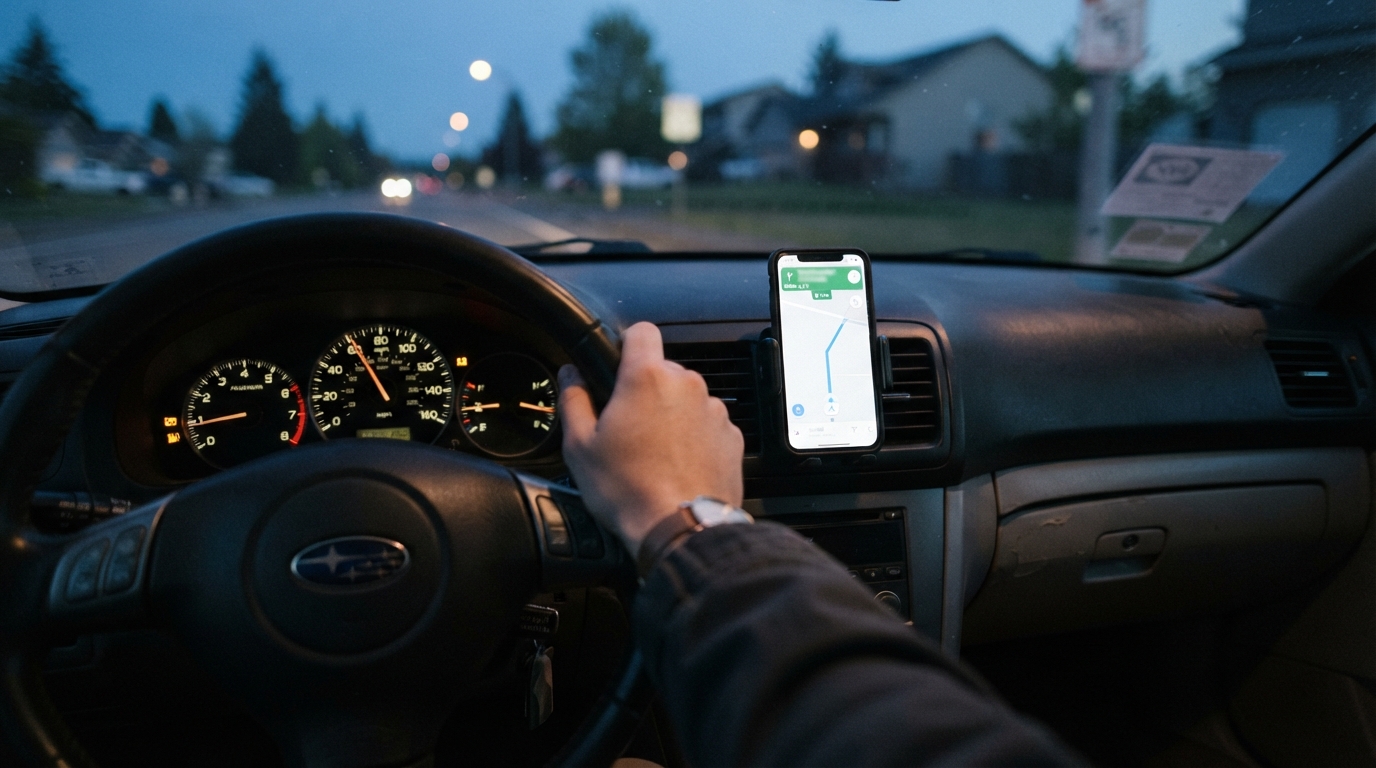
Most drivers assume their insurer has some vague, all-seeing awareness of how they drive. In reality, insurers only know what they can measure, and they can only measure a handful of things well. The rest is inference from claims data across millions of drivers, not surveillance of you personally. Knowing where the actual measurement happens – and where it doesn’t – helps you stop worrying about the wrong things and start paying attention to the ones that move your rate.
Habits tied to telematics and usage-based programs
If you’ve opted into a usage-based insurance program – through a mobile app, a plug-in device, or your car’s built-in connected services – your insurer is collecting a specific, limited set of data points. This is the one category where “everyday habits” are tracked in something close to real time. The core metrics tend to be:
- Hard braking events – sudden deceleration above a threshold the app sets, not ordinary stopping at a light.
- Rapid acceleration – the mirror image of hard braking, flagged when it’s abrupt rather than gradual.
- Late-night driving – trips that fall in a window insurers associate with higher crash rates, usually stretching from around midnight into the early morning.
- Phone handling or distraction scores – some apps use phone motion and screen-on data to estimate whether you were interacting with the device while the car was moving.
- Speed relative to the posted limit – some programs compare your GPS-derived speed to road data, though accuracy varies by app.
- Total mileage – straightforward and heavily weighted, since more time on the road generally correlates with more exposure to a claim.
Two things matter here that people often miss. First, these programs score patterns over weeks, not single incidents – one hard stop to avoid a deer isn’t going to tank your score. Second, participation is usually optional and reversible: you can typically check your program’s dashboard to see your own scores before they’re translated into any discount or surcharge, and you can usually opt out if the tracking doesn’t reflect how you actually drive (a work carpool with lots of 5 a.m. starts, for instance, will look like “late-night driving” to an algorithm that doesn’t know your schedule). If you’re enrolled, spend five minutes in the app’s dashboard once a month. It’s the only place where day-to-day driving is being watched at all.
Habits tied to claims frequency over time
Outside of telematics, insurers don’t watch your driving – they watch outcomes. What ends up affecting your policy over the long run is the pattern of claims and violations tied to your name and your vehicle, not the habits behind them. Practically, that means:
- At-fault accidents, even small ones, weigh more heavily than most single factors, and multiple at-fault claims within a few years compound that effect.
- Moving violations on your driving record – speeding tickets, running a red light, reckless driving citations – get pulled from state motor vehicle records during underwriting and renewal, and they stay visible for a period that varies by state and violation type.
- DUI or reckless driving convictions sit in a different tier entirely and can affect eligibility with standard insurers, not just pricing.
- Frequency of any claims, including non-fault ones like a cracked windshield or a parking lot dent, can shape how an insurer views your risk profile at renewal, even when you weren’t the cause.
- Where you park and where you commute</strong ties back to claims data at the ZIP code level – theft rates, accident density, and weather-related losses in your area factor into pricing independent of anything you personally do behind the wheel.
The common thread is time lag. None of this shows up the week it happens. It shows up at your next renewal, or the one after that, once the claim has been processed and the violation has posted to your record. That lag is exactly why it’s worth pulling your motor vehicle record and your claims history (through a consumer disclosure report) once a year – not to dispute anything, just to confirm what’s actually on file matches what you expect. Errors do creep in, especially after a claim involving another party or a citation that got reduced or dismissed.
Habits that feel risky but rarely move your rate
Plenty of driving behaviors feel dangerous, and might genuinely be worth avoiding for your own safety, but simply don’t register anywhere in the pricing or underwriting process. It’s worth separating “unwise” from “tracked,” because conflating them leads to a lot of misplaced anxiety about your policy.
- Aggressive lane changes or tailgating – unless one causes a citation or a crash, there’s no mechanism that records this. Other drivers’ dashcam footage doesn’t feed into your insurance file.
- Driving with a messy or poorly maintained car – cosmetic condition has no bearing on your rate unless it results in a mechanical failure that causes a claim.
- Occasional long road trips – a single cross-country drive doesn’t register as a habit; annual mileage estimates are typically self-reported ranges, not trip-by-trip logs, unless you’re in a telematics program.
- Driving someone else’s car occasionally – as long as it’s infrequent and permitted, this generally doesn’t create a tracked pattern; frequent, regular use of another vehicle is a different situation worth mentioning to your agent, but a one-off borrow isn’t logged anywhere.
- Music volume, eating while driving, or talking to passengers – genuinely risky in the moment, genuinely invisible to any insurer unless it results in a citation or collision.
- Parking tickets and non-moving violations – these go to the municipality, not your driving record, and don’t factor into insurance pricing.
None of this is a green light to drive recklessly – it’s just accurate information about where the actual financial consequence lies. If a habit doesn’t result in a citation, a claim, or telematics data, it’s not part of your insurance file, full stop.
What to actually do with this information
Here’s the ten-minute version of turning all this into action, roughly in order of what pays off first.
- Check whether you’re in a telematics program right now. Log into your insurer’s app or account portal and look for a driving score, trip list, or usage-based discount section. If you don’t see one, you’re probably not enrolled, and none of the hard-braking or late-night driving factors apply to you at all.
- If you are enrolled, glance at your score categories. Most apps break performance into two to five categories (braking, speed, phone use, time of day, mileage). Note which one is dragging your score down – it’s usually one, not all of them – and decide if it’s a real pattern or a fluke week.
- Pull your driving record once a year. Most states let you request this directly from the DMV for a small fee or sometimes free online. Confirm the violations listed match what you remember and that resolved or dismissed items were actually removed.
- Request a copy of your claims history report. These consumer disclosure reports compile claims tied to your name and vehicles across insurers. Check for claims you don’t recognize or duplicate entries, which can happen when a claim gets recorded by both parties’ insurers.
- Ask your agent directly what’s driving your current rate, rather than guessing. A five-minute call or chat can tell you whether your premium reflects your driving record, your location, your vehicle, or something administrative like a lapse in coverage – these get weighted very differently and only one of them relates to habits at all.
- Decide about telematics deliberately, not by default. If your driving pattern (commute timing, road type, mileage) doesn’t suit a usage-based program, don’t enroll just because it’s offered. If it suits you well, it’s often the single most direct way your day-to-day habits translate into a lower rate.
The bigger picture: your insurer is not grading your driving style in general. It’s grading a narrow set of measurable inputs – telematics data if you’ve opted in, and claims and violations if you haven’t – and pricing accordingly. Spend your ten minutes checking those specific inputs rather than auditing your driving philosophy. That’s where the actual leverage is.
